There is no fixed lifespan for a central air conditioner. Two identical units can wear out years apart. What decides it is how the system was sized and installed, how hard the house makes it work, and whether anyone has looked after it. This guide covers what shortens an air conditioner's life in a Norwood house, which repairs are the big ones, and why some cost much more than others.
How long an air conditioner lasts depends on the house as much as the unit
A central air system is two halves joined by copper lines: the outdoor condenser with the compressor, and the indoor coil sitting on top of the furnace. The compressor is the part that wears. Everything that makes it run longer, hotter or more often brings its end closer.
The things that shorten its life are usually these:
- Wrong size. An oversized unit cools the house fast, shuts off, starts again, and never runs long enough to pull moisture out. Short cycling is hard on the compressor. An undersized unit runs flat out all afternoon.
- Ducts that cannot carry the air. Most homes in the village are more than forty years old. Many were heated with wood or coal first and had ductwork added later, often undersized or poorly sealed. Central air added to those ducts can freeze its indoor coil because not enough air crosses it.
- A slow refrigerant leak. Low charge makes the compressor run hot. It keeps cooling, just less, so the leak goes unnoticed for a season or two.
- A dirty outdoor coil. Cottonwood fluff, grass clippings and leaves pack the fins. The unit then rejects heat poorly and runs at higher pressure.
- A blocked filter. Same effect as small ducts: low airflow, a cold coil, ice.
Newer homes in Norwood Park have a different set of problems. They are tightly built with small duct runs, so trouble tends to come from a system that was not set up and balanced properly at installation, or one sized wrong for the house, rather than from worn parts. A unit that has struggled since day one will not reach the age of one that was matched to the house.
Winter matters too. The Peterborough area averages 151.2 cm of snow a year. Snow sliding off a roof onto the condenser can bend the fins and the fan guard. Keep the unit clear and leave the top open to the air; a solid cover that traps moisture does more harm than good.
Signs an air conditioner is near the end
- It needs refrigerant added more than once.
- The compressor hums but will not start, or trips the breaker on start-up.
- The house never gets down to the set temperature on a hot day, even with clean filters and a clear outdoor coil.
- The outdoor coil is corroded, with leaks found in more than one place.
- The system uses an older refrigerant that is no longer made, so every top-up costs more.
One of these on its own is usually a repair. Two or three together on an older unit is a replacement conversation.
The most expensive repairs are in the sealed system
AC repairs split into two groups.
The first group is electrical and mechanical parts outside the refrigerant circuit: the start or run capacitor, the contactor, the outdoor fan motor, a thermostat wire, a blocked condensate drain on the indoor coil. These are common, the parts are easy to reach, and the job is usually done in one visit. A failed capacitor is the most frequent reason a unit hums and will not start, and it is one of the cheaper fixes.
The second group is anything that means opening the refrigerant circuit. These are the big ones:
- Compressor replacement. The most expensive single repair. The compressor is sealed inside the outdoor unit and brazed into the lines.
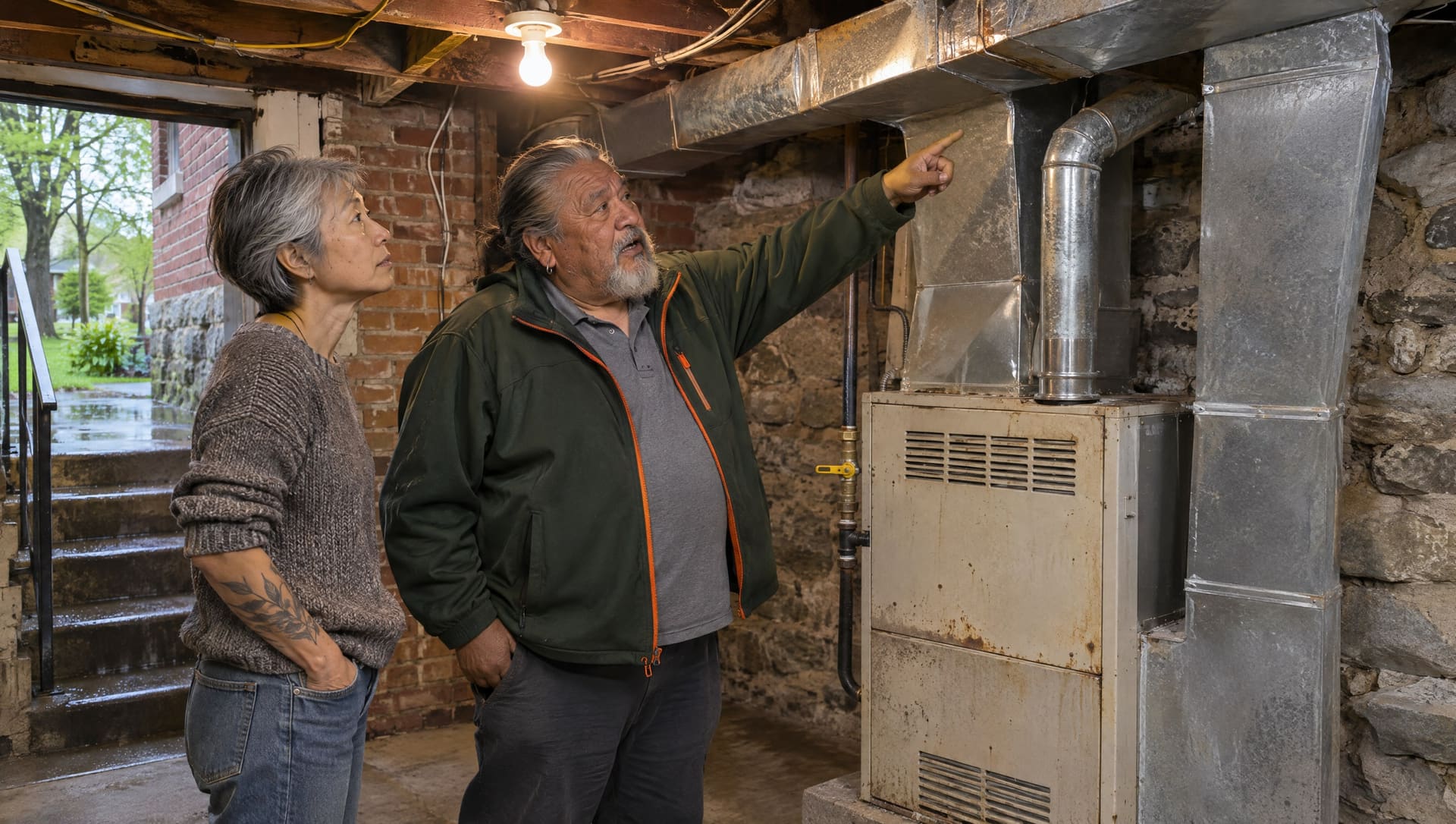
- Indoor coil replacement. The coil sits in a cabinet on the furnace, often boxed in by ductwork. In older basements with tight clearances, getting it out can take more time than the coil itself.
- Outdoor coil replacement or a leak repair in the coil.
- Line set replacement, where the copper between the two units leaks or is the wrong size for a newer unit.
Why AC repairs cost what they do
The price of a sealed-system repair is not mainly the part. It is the procedure around it. To replace a compressor or a coil, the technician has to:
- Recover the refrigerant into a cylinder. It cannot be vented.
- Find the leak, if there is one, and confirm the fix.
- Braze in the new part, usually with nitrogen flowing through the lines to keep scale out.
- Pressure-test the circuit.
- Pull a deep vacuum to remove air and moisture, and wait to see it hold.
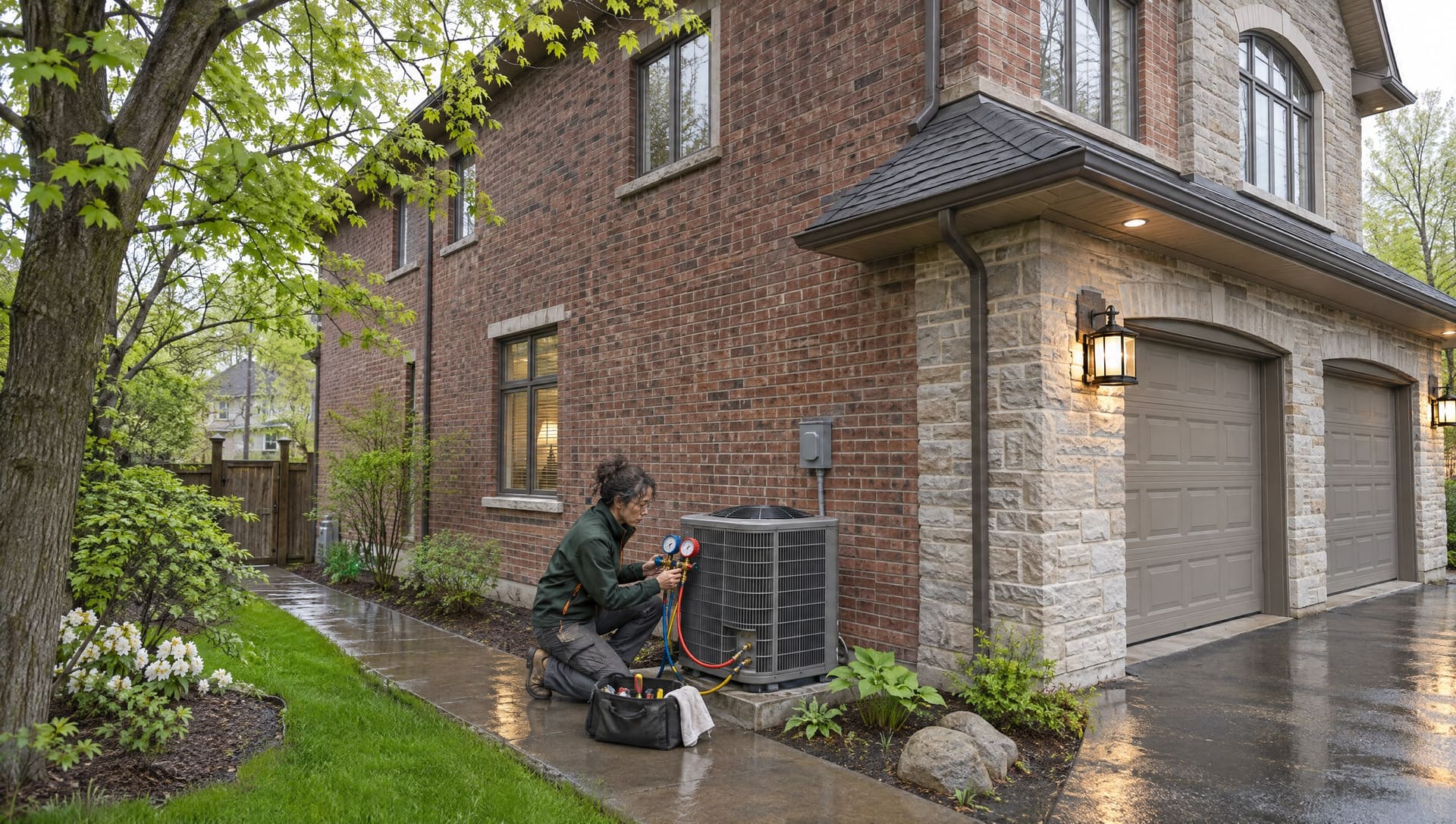
- Weigh in a fresh charge and check the system's pressures and temperatures under load.
Skipping any of these shortens the life of the new part. That is why this work takes most of a day and why it is a regulated trade. Work is performed by 313A refrigeration and air conditioning mechanics.
Other things that move the price of a repair:
- Refrigerant type. Older systems use a refrigerant that is no longer produced, so what is left costs more and some parts are harder to source.
- Access. A coil buried behind ductwork in a low basement, or a condenser tucked behind a deck, adds time.
- Matching. A new coil has to suit the outdoor unit and the furnace blower. A mismatched pair cools poorly and wears out early.
- Timing. Parts for an older unit can take time to arrive in the middle of summer.
Repair or replace: how to weigh it
Start with the age of the unit and the size of the repair. A capacitor or fan motor on almost any unit is worth fixing. A failed compressor on an older system using an outdated refrigerant usually is not, because the rest of the system is the same age and the coil or lines may be next.
Check the manufacturer warranty before deciding. Compressors and coils often carry a longer parts warranty than the rest of the unit, but it usually depends on the unit having been registered after installation and on records of regular maintenance. If the part is covered, the repair can make sense on a unit you would otherwise replace. Labour is a separate question, so ask what the written price covers.
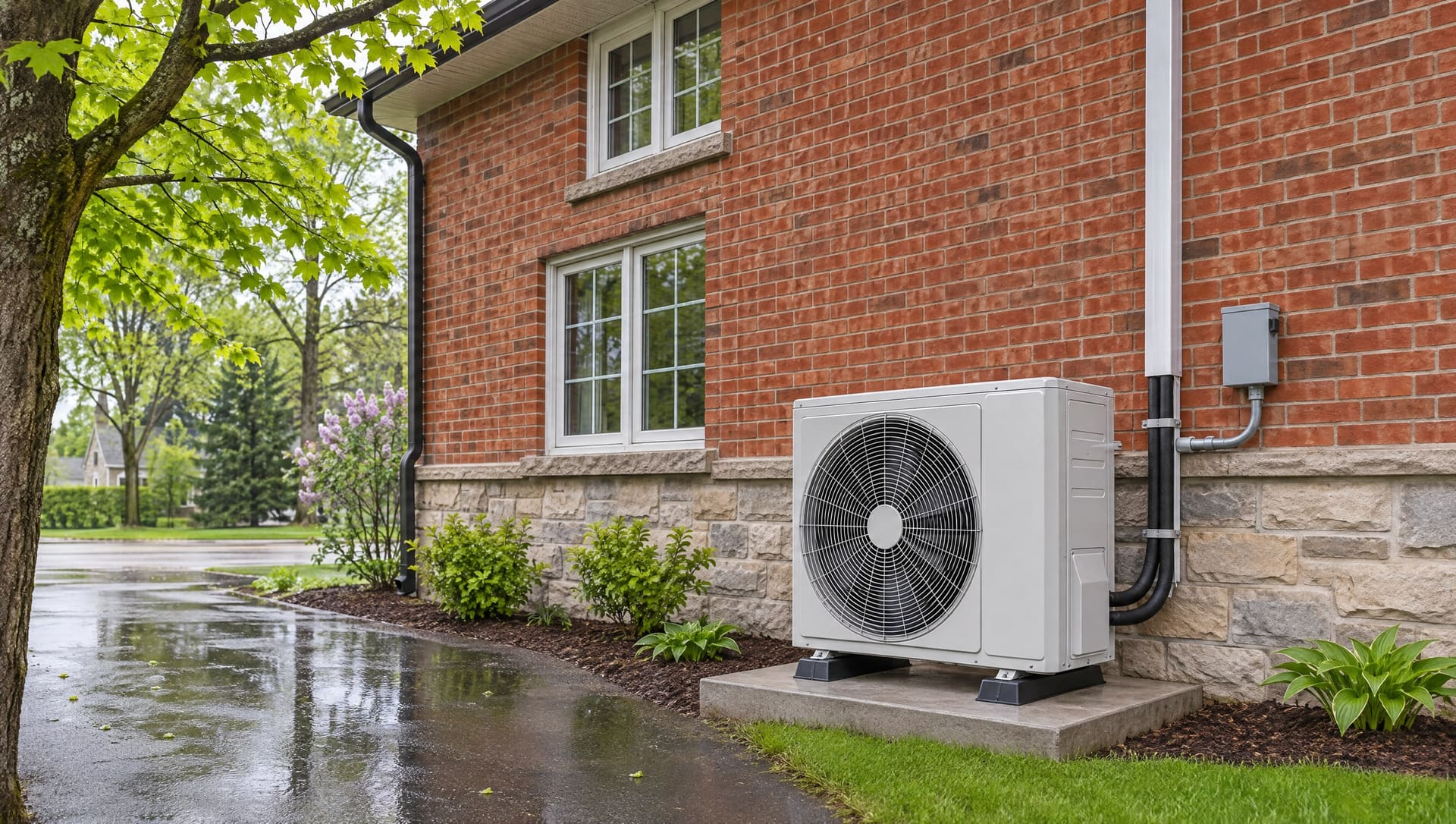
If you replace, size the new system to the house, not to the old label. In an older village house, look at whether the ducts can carry it. Where they cannot, a ductless system may suit better than forcing central air through undersized runs. The guide to what decides the price of a new furnace or central air covers this in more detail, and so does the page on air conditioning installation.
What you can check before calling
- Is the filter clean?
- Is the outdoor coil clear of fluff and debris, and is the fan turning?
- Is the breaker for the outdoor unit on, and the disconnect switch beside it in place?
- Is the thermostat set to cool, below room temperature?
- Is there water around the furnace from a blocked condensate drain?
- Is there ice on the copper lines? If so, turn the cooling off and run the fan alone until it melts.
If all of that checks out and the house is still warm, it is time for a technician. Yearly maintenance catches low charge, a weak capacitor and a dirty coil before they take the compressor with them.
If your central air is not cooling, is leaking or keeps tripping the breaker, see air conditioner repair.