Grants and rebates for heating equipment in Ontario do not stay still. Programs open, change their rules, run out of funding and close. A page that was right last winter may be wrong now. So the useful question is not only "is there a rebate" but "how do I check what applies to my house, this month".
This guide covers that, plus what decides the cost of a heat pump in a house of around 2,000 square feet.
Is there a grant for a new furnace in Ontario
Sometimes. It depends on the program running at the time, the equipment you choose and the order you do things in.
Some programs cover heat pumps but not gas furnaces. Some cover a high-efficiency furnace only as part of a wider energy upgrade. Some require an energy assessment before any work starts. Some are loans rather than grants. A straight swap of one gas furnace for another may qualify for nothing at all.
The practical answer: check the current program pages, note the date they were last updated, and confirm the rules before you sign a contract or book an install date.
Is there a rebate for a high-efficiency furnace
The same rule applies. High-efficiency furnace rebates have been offered in some periods and not in others. When one exists, it usually names a minimum efficiency rating and a list of eligible models. A furnace that is efficient but not on the list does not count.
If a rebate matters to your decision, ask the contractor to write the exact make and model on the price, so you can check it against the program's list yourself.
Where rebates usually come from
In Ontario, money for heating upgrades tends to come from a few kinds of source:
- Federal programs aimed at home energy upgrades
- Provincial programs, which may be separate or combined with federal ones
- The natural gas utility that serves your address, which may run its own efficiency offers
- Your electricity provider, for programs tied to heat pumps or electric load
They do not always stack. Some programs let you claim from more than one source. Others reduce one rebate if you take another. Read the stacking rules before you count on two cheques.
What the programs usually ask for
The details change, but the same requirements come up again and again:
- An energy assessment before the work, and sometimes another after it
- Equipment from an approved list, identified by model number
- Installation by a contractor who meets the program's trade rules
- An itemised invoice showing the equipment, model and serial numbers
- Proof that the house is your primary residence
- A claim filed within a set time after installation
Order matters. A common way to lose a rebate is to install first and apply later, when the program required the assessment first. If a program asks for a pre-work assessment, book it before the old furnace comes out.
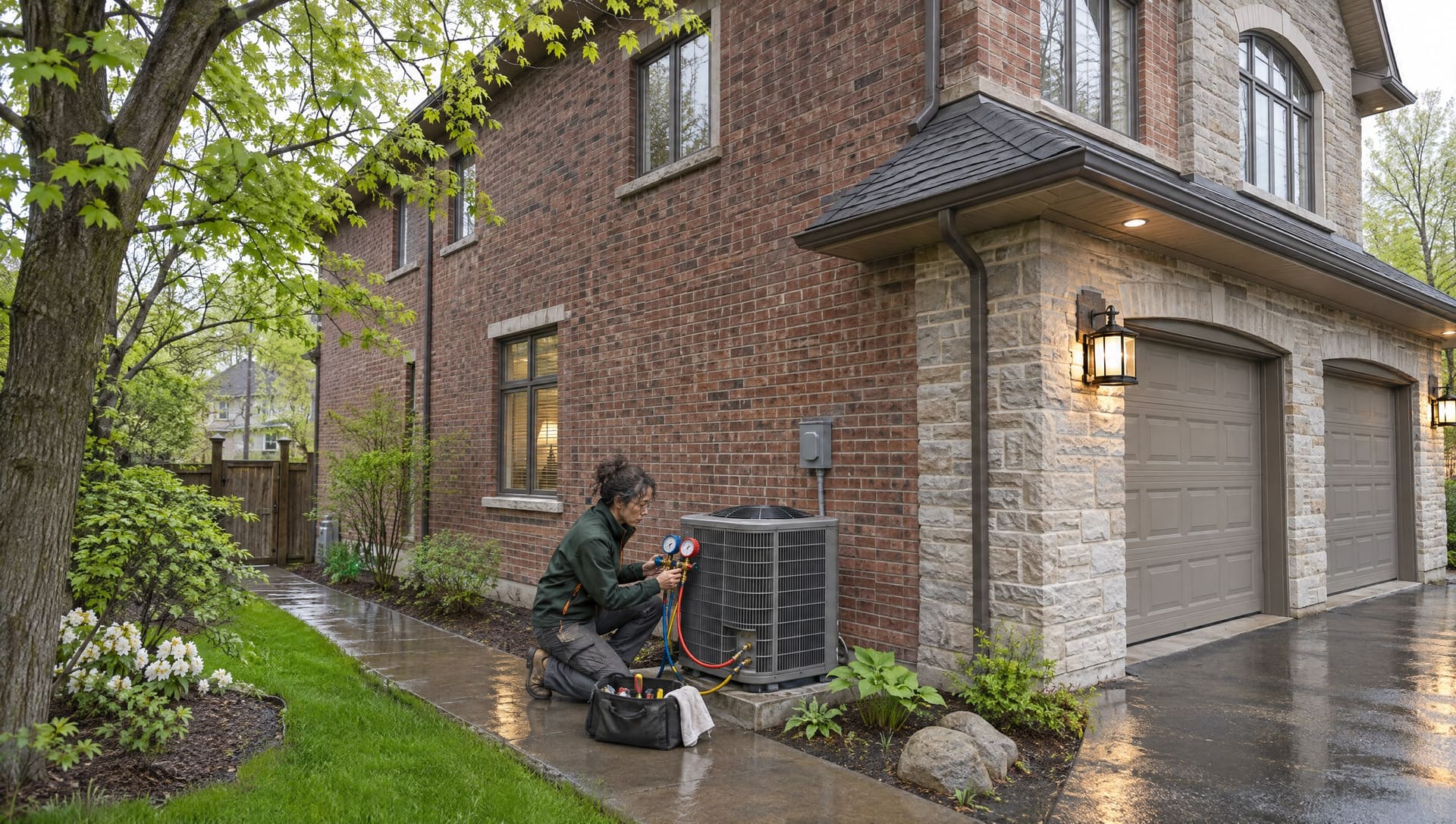
Trade rules matter too. Gas appliances in Ontario are installed to the CSA B149.1 Natural Gas and Propane Installation Code under Ontario Regulation 212/01. Work is performed by TSSA-certified gas technicians. A heat pump is refrigeration work, a compulsory trade in Ontario. Work is performed by 313A refrigeration and air conditioning mechanics. Programs and manufacturer warranties both expect the install to meet these rules, so keep the paperwork.
How to check what applies to your house
A short routine works better than searching for a single answer:
- Find the current program pages and write down the date you checked them.
- Check eligibility: owner-occupied, fuel type, house type, and whether you are replacing or adding equipment.
- Book any required energy assessment before work starts.
- Get a written price that lists the exact equipment models.
- Check each model against the program's eligible list.
- Keep the invoice, the assessment report and photos of the installed equipment and its labels.
- File the claim before the deadline.
If the program closes between your quote and your install date, you may not be covered. Ask how long the program says funding is open, and plan the install around that if you can.
How much is a heat pump for a 2,000 square foot house
There is no single number, and floor area is a weak guide. Two houses of the same size in Norwood can need very different systems. What decides the cost:
- Heat loss: insulation, windows and air leakage set how much heat the house needs on the coldest night.
- Ducts: whether the existing ductwork can carry the airflow a heat pump needs.
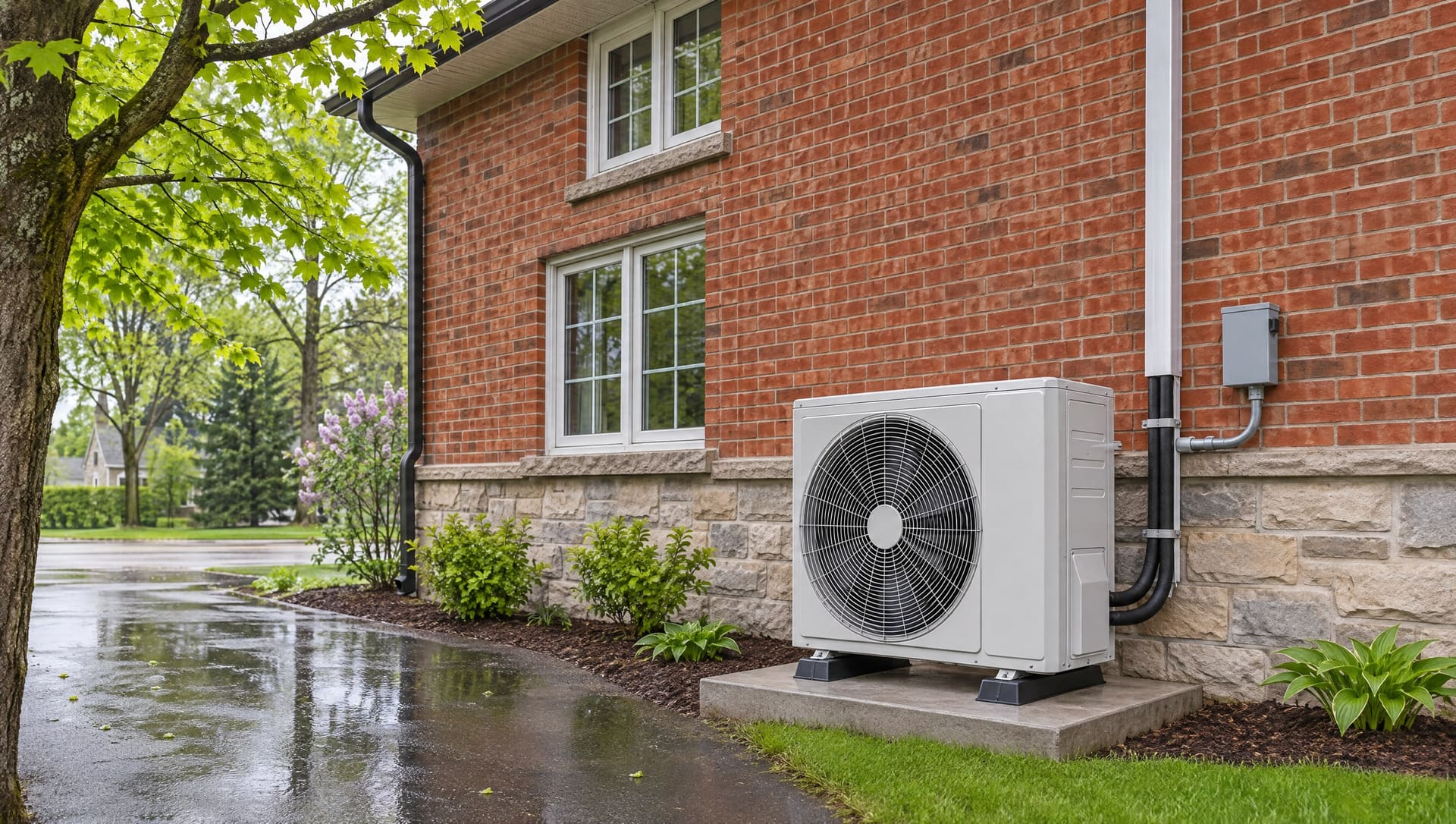
- Equipment type: a cold-climate heat pump that carries the house through winter, or a hybrid set-up paired with a gas furnace for the coldest days.
- Electrical: whether the panel has room for the new load.
- Ductless heads: in a house without suitable ducts, how many indoor units it takes to reach each room.
In the 2016 Census, 235 of the 560 occupied homes in the Norwood population centre were built in 1960 or before, and another 165 from 1961 to 1980. Most houses in the village are over forty years old, and that shapes the price more than square footage does.
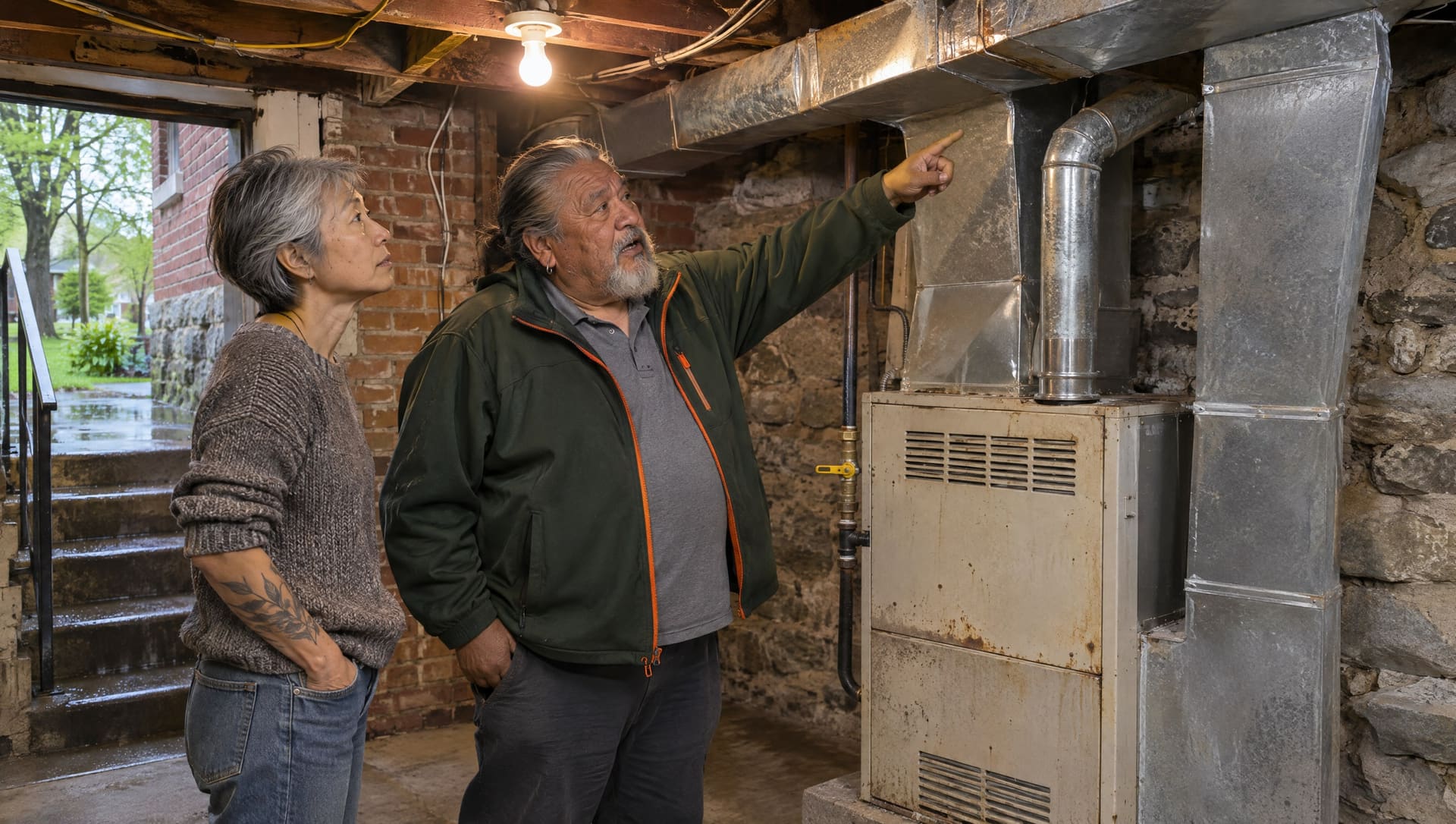
The older village houses, on lots that grew out of Keeler's Mill, were first heated with wood or coal and converted later. A technician often finds ductwork that was added after the fact, undersized or poorly sealed. A ducted heat pump may need duct work first. A ductless system may be the better fit.
Norwood Park Phase 4 is the other end. These homes are tightly built, with small duct runs and ventilation units, and some were built with heat pumps or high-efficiency furnaces from the start. The cost there is less about duct repairs and more about whether the system was sized and balanced properly at installation.
For more on what moves the number, see what decides the price of a new furnace or central air in an older Norwood house.
Pick the system first, then count the rebate
A rebate should not choose your equipment. A heat pump that is the wrong size, or a furnace bought for its rebate in a house it does not suit, costs more over its life than the rebate returns.
Size the system to the house's heat loss, not to the label on the old furnace. Many older Norwood houses have oversized replacement furnaces, and matching that size again wastes money whether a rebate applies or not.
Remember that most rebates are paid after the work. You carry the full cost until the cheque arrives.
Things on an older house that a rebate may not cover
The quote on an older village house often includes work beyond the equipment:
- A chimney liner, when a new furnace vents through the side wall and a gas water heater is left alone in the old chimney.
- New side-wall vent locations, placed so January drifts do not bury them.
- Duct sealing or new returns.
- Asbestos on old ducts or pipes, which has to be dealt with before work goes ahead.
Check whether the program you are using covers any of this. If it only covers the equipment, plan for the rest separately.
To look at options for your house, see heat pumps or furnace installation and replacement with Norwood Heating Cooling.